


Marc Urselli
CRÆSHER
πoise (self-incestuous noise inception)
release date: 03.14.14
|
Artwork
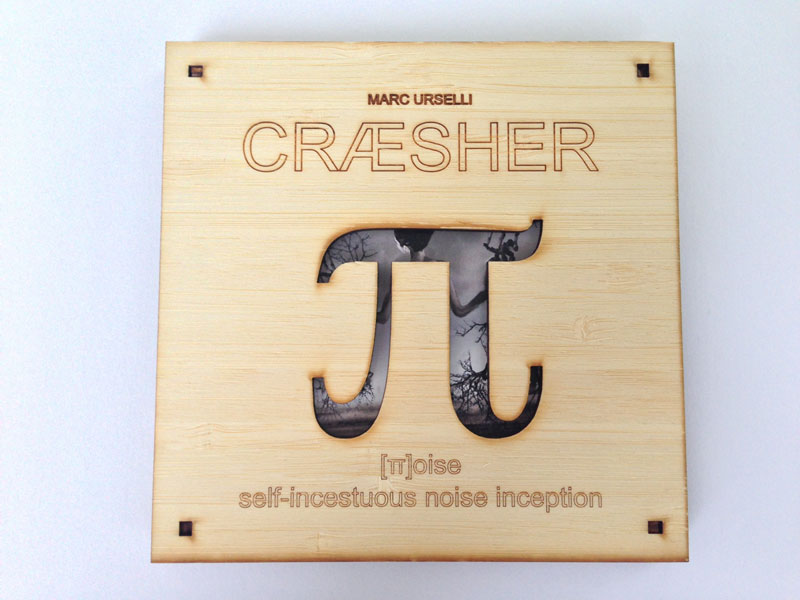
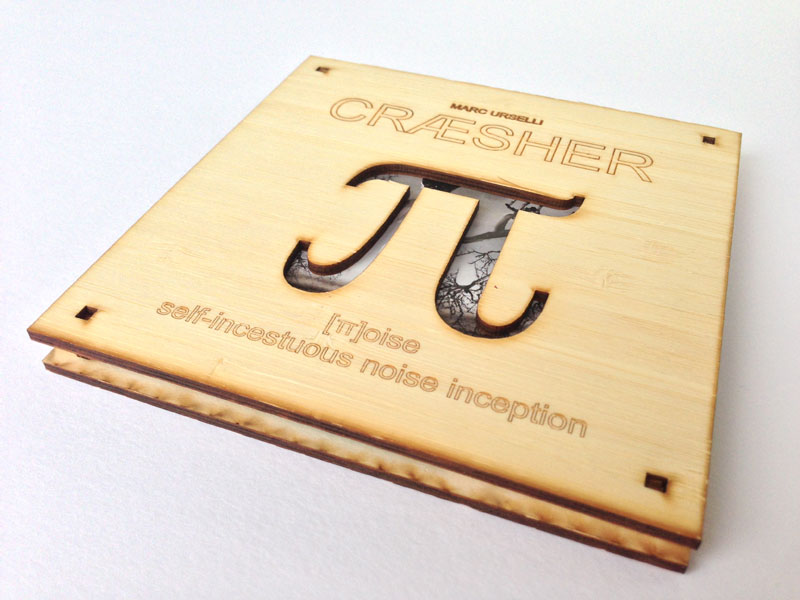
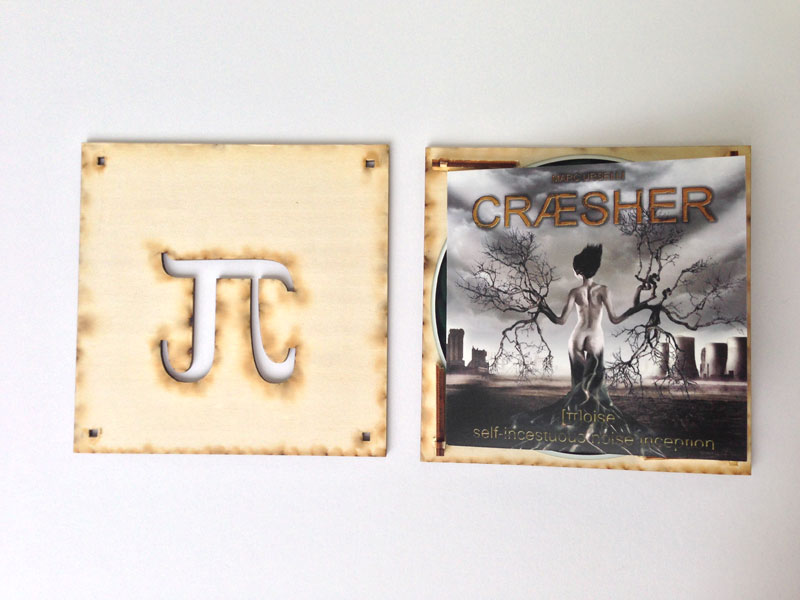
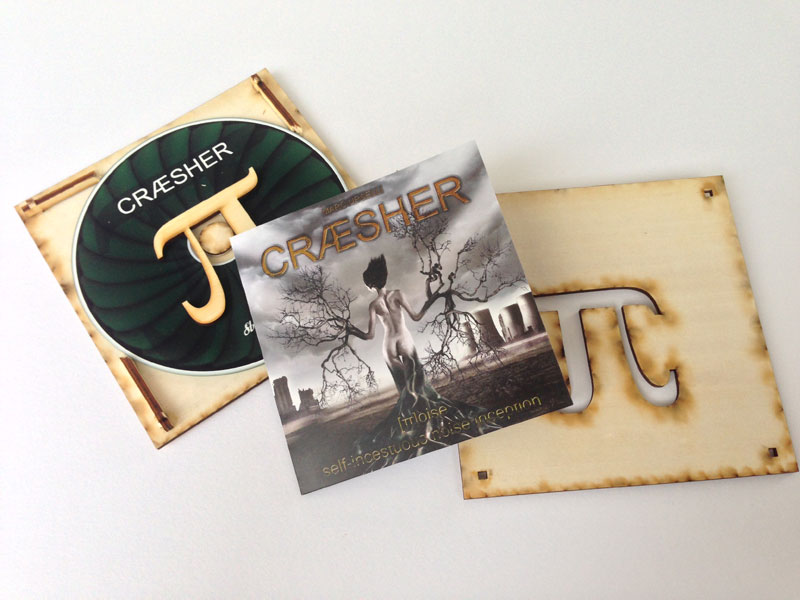
|
Key Selling Points
|
|
Press Clippings "This is not a pure and classical noise release, but an intelligent approach in producing noise. Cræsher might be seen as the future-format of Autechre; a kind of sound for the further generations" Side-Line Magazine "By building upward from a raw sine wave, every gesture becomes an opportunity to question motive and outcome. [...] I see the glimmering eye of technological singularity, quietly threatening to transcend obedience and exist off its own logic." Attn:Magazine "A surprising amount of variety results from seemingly simple materials and a deterministic creative process; each track has a distinctive character. [...] and this is the basis of all artistic communication. If you want to hear what is happening at the intersection of art and engineering, CRÆSHER is worth a listen." Sequnza21 Magazine http://www.side-line.com/reviews_comments.php?id=51217_0_17_0_C http://www.attnmagazine.co.uk/music/8175 http://www.sequenza21.com/cdreviews/2014/06/craesher-by-marc-urselli/ http://www.musikreviews.de/reviews/2014/Crasher/noise-Self-Incestuous-Noise-Inception/
Press Release
Provocation. Research. Experiment. These questions prompted Cræsher to research the origin of noise and the art and science of generating noise that is somehow "musical" and "interesting".
The project originally started as a provocation but quickly turned into a research on the genesis of noise and an experiment in the manipulation of the most simple, pure, unadulterated and basic source of sound itself: the sine wave.
The next challenge was to build upon and around that basic sine wave in a way that would generate and shape dynamics. The noise would have to generate a life of its own. The goal became to create an experimental form of ambient-noise WITHOUT ANY sort of recorded sound. Everything would have to be generated from a single sine wave and would have to feed off of itself to generate change in the music without any human intervention and without any recorded sound.
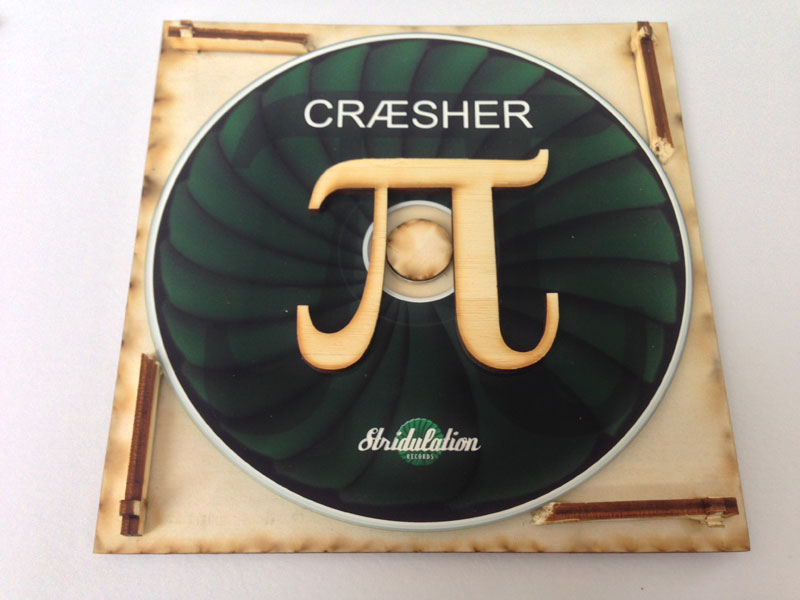
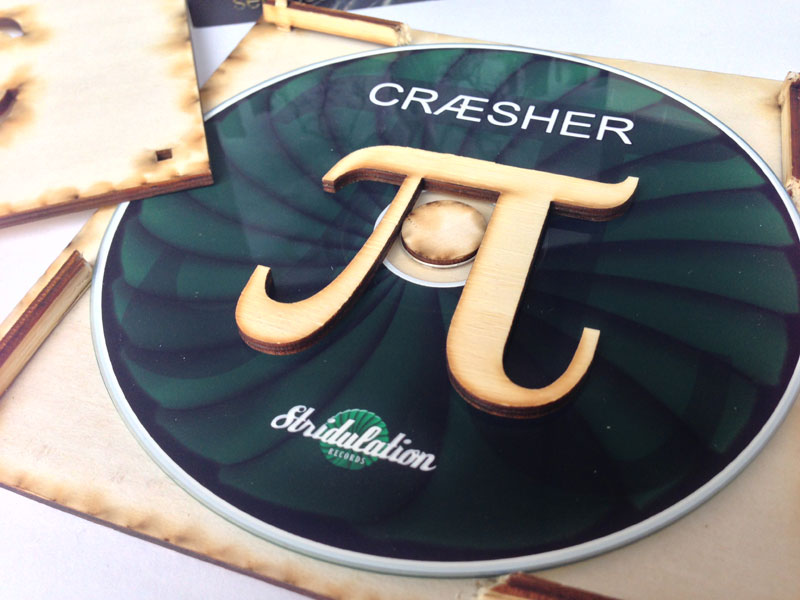
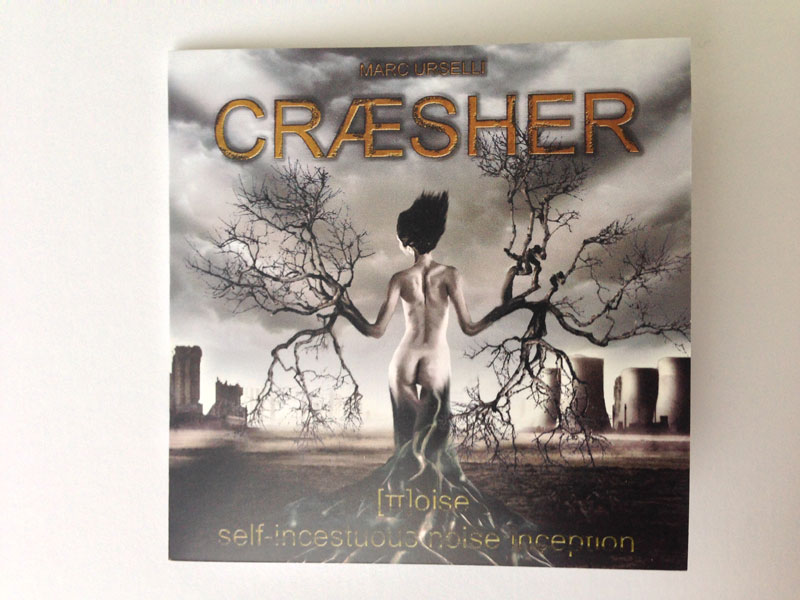
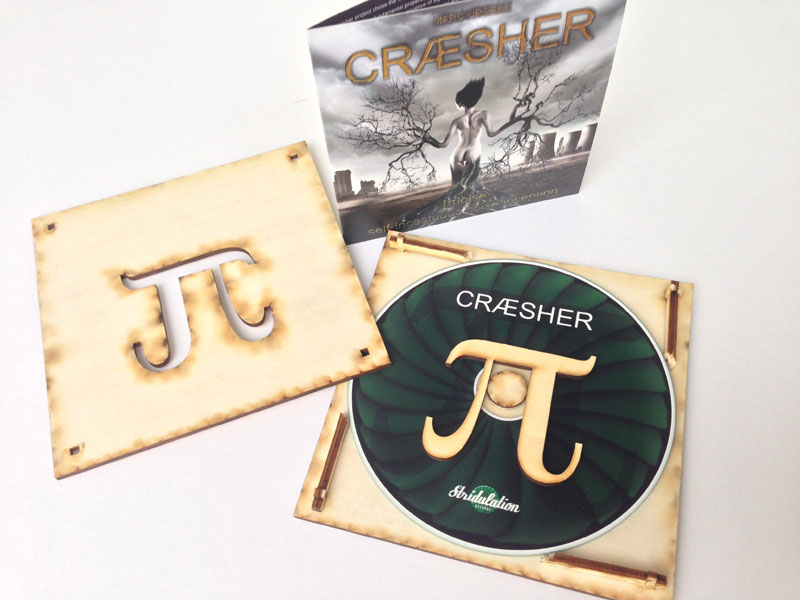
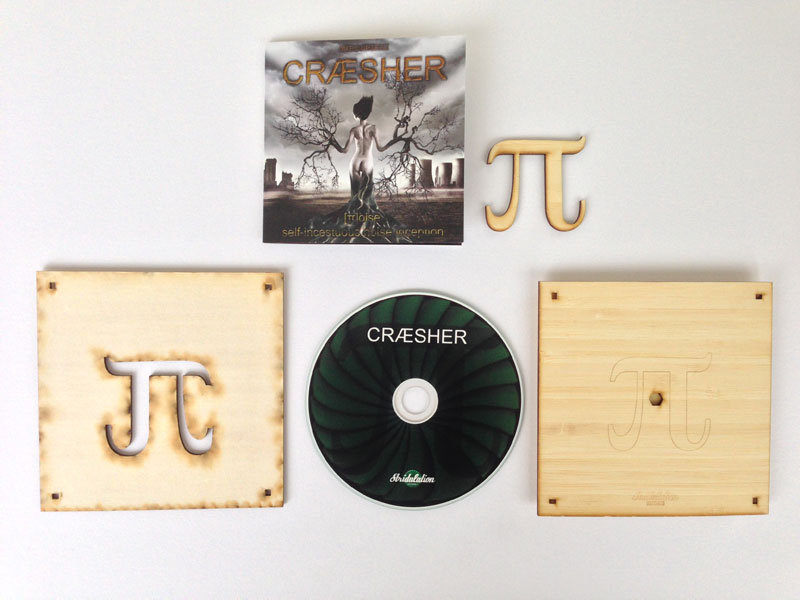
The process is incestuous, because any sound controls its own parameters and feeds into itself to create a new sound. The process is also inceptive because it represents the commencement of a new sound. In a way this process is the sonic version of the Penrose stairs (made famous by M.C. Escher, the Penrose stairs make four 90-degree turns as they ascend or descend to form a continuous loop, so that a person could climb them forever and never get any higher). The same principle was also applied to the album as a whole. While on tour in Europe, Cræsher opened the laptop, set up a Pro Tools session, created a bunch of Aux tracks and started bouncing signals around tracks. After the first piece Cræsher created 10 more pieces. Every piece is different but every piece starts from a basic sine wave and contains absolutely no recordings or samples. Some of these pieces follow cyclical evolutions while others morph in time arguably in accordance with absolute randomness. One such piece is the opening track, which is the same as the closing track but contains very different sounds because of the random nature of the incestuous process that is happening within. In line with the impossible geometry of the Penrose stairs, the opening and closing tracks of the album are variations on the same theme and would flow into each other seamlessly, if only CD players allowed for crossfades between the last track of a disc and the first track of the same disc the way consecutive tracks can. Every piece (except the opening and closing track) on this album was clocked at 4'14". The opening and closing track were clocked at 3'44". This would make for a 50'10" long CD, however every track shows a duration of 3'14". This was achieved by crossfading every track into the next with a 1'00" long crossfade, effectively shortening the duration of the CD to a continuously flowing and ever changing 38'48". The mathematical near-impossible incongruence of such juxtaposition of tracks is also a tribute to the Penrose's impossible object. The Cræsher project chose the Greek letter π as the main title for this project because in mathematics π has two fundamental properties: irrationality (it cannot be written as a relationship of two other numbers) and transcendence (no sequence of algebraic operations can be equal to its value). The creation process of this noise is both irrational and trascendental and therefore "pi" is the perfect symbol to represent it. Because "pi" is also defined as the ratio of a circle's area to the square of its radius and is approximately equal to 3.14159, and this is why all the tracks on this album are exactly 3'14" in duration. All the pieces on the album are numbered with greek numbers/letters. The choice of the artwork for this release is intrinsically connected with the contents of the release itself. It features a modern day rendition of Myrrha (Greek: Μύρρα), also known as Smyrna (Greek: Σμύρνα), who according to Greek mythology was transformed into a myrrh tree as punishment for having an incestuous relationship with her father Cinyara (Greek: Κινύρας), king of Cyprus, who is also revered as the creator of art and musical instruments. The incestuous relationship between Cinyara and Myrrah gave birth to Adonis (Greek: Ἄδωνις), the god of beauty and desire. The image on the inside cover of this release, created by Italian digital artist Nico De Luca, aims at portraying Myrrha to depict the incestuous nature of the creative process of this experiment. In the same way that Myrrha created beauty (in the form of Adonis) through incest with the creator of art and musical instruments (in the form of Cinyara), these tracks aim to create sonic beauty through sonic incest with the most basic of all creators of art and music (in the form of the sine wave). As Cicero said: "Omnia vivunt, omnia inter se conexa." ("Everything is alive; everything is interconnected.") |
|
|
Artist Contact
official site: www.marcurselli.com |
Label Contact
official site: www.stridulationrecords.com |



Stridulation Records
New York | Trondheim | Rome